Visual proof
Platform in production
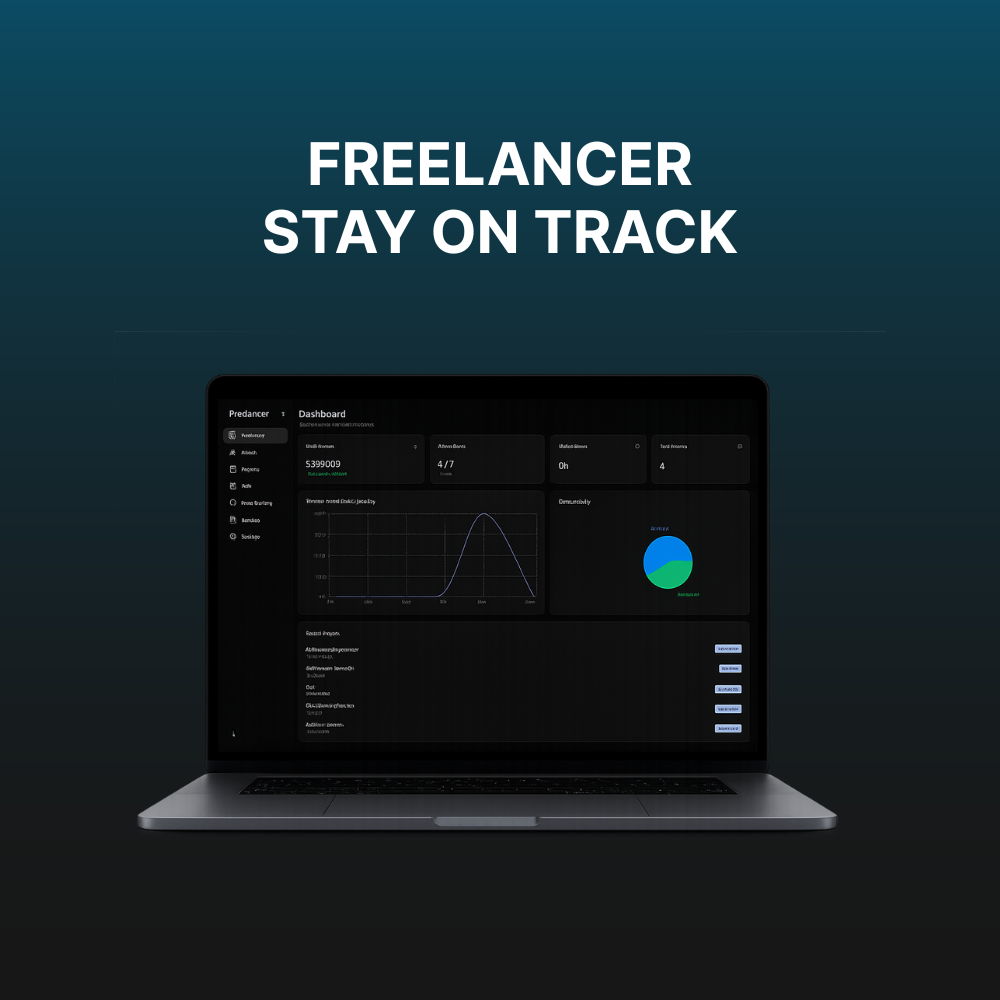
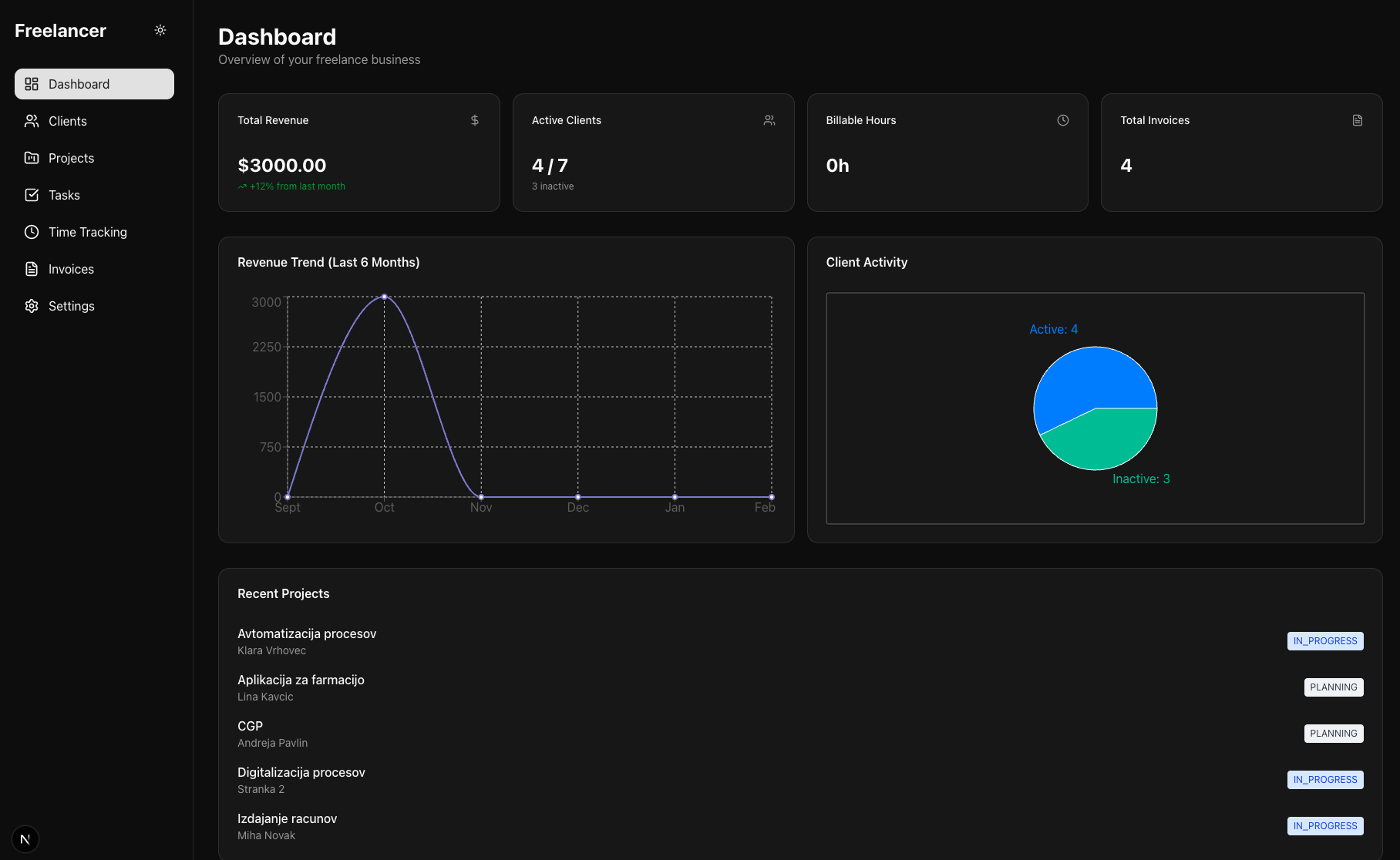
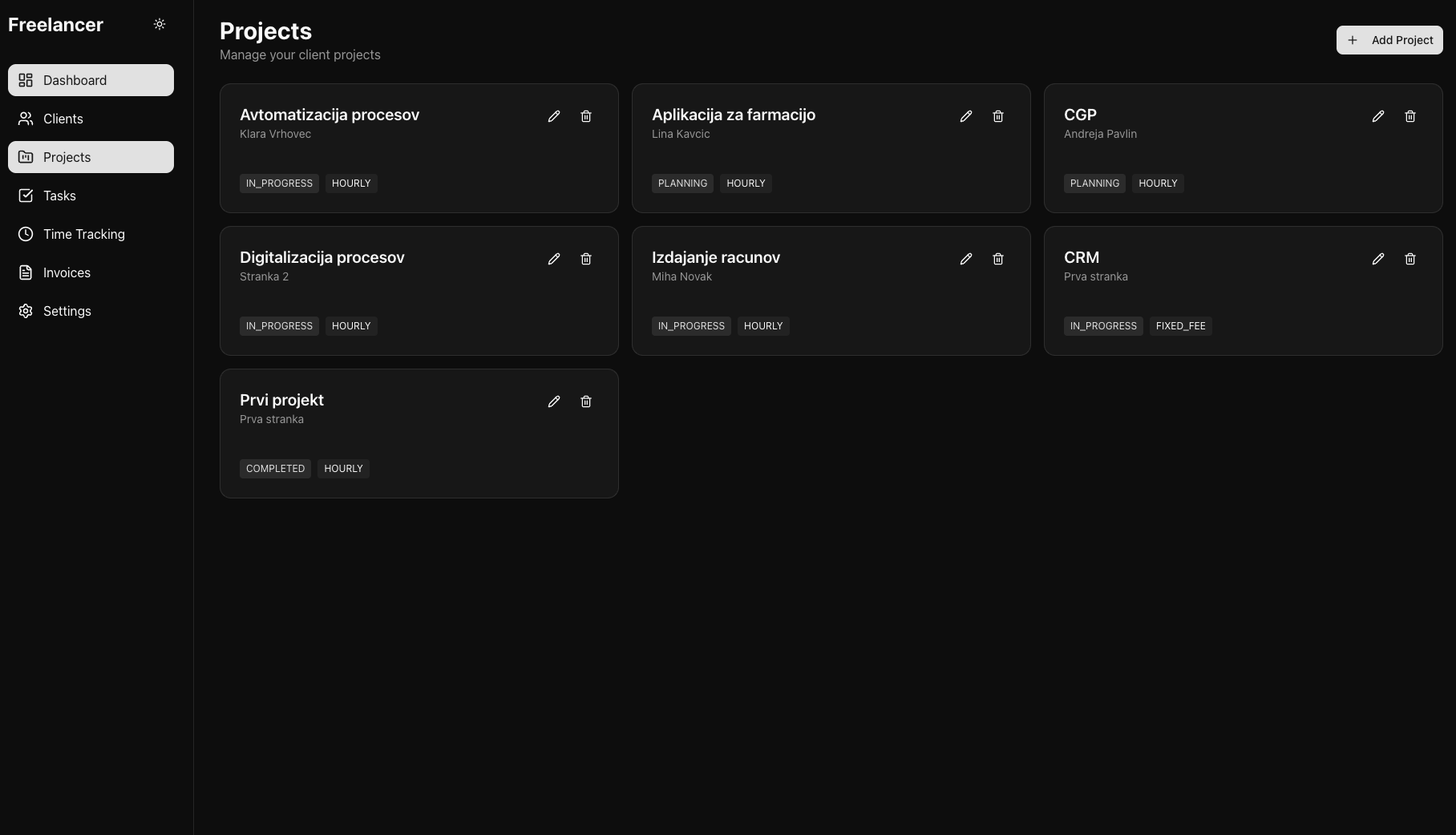
I designed and built FreelancerPilot, an operations SaaS that consolidates client management, time tracking, and invoicing into one system for freelancers.
FreelancerPilot was built at the request of a company working closely with freelancers. They observed a recurring pattern: most freelancers struggled to manage clients, projects, tasks, time tracking, and invoicing across fragmented tools or spreadsheets.
The goal was to create a single operational system that gives freelancers clarity over their work and finances, while remaining simple enough for daily use. The platform was designed as a SaaS product with potential for additional revenue streams.
Client, project, and task data scattered across disconnected tools
Weak connection between work performed and invoices sent
Manual or error-prone invoicing and payment tracking
Limited visibility into deadlines, workload, and income
No shared space for collaboration with clients
These problems create friction and mental overhead, pulling freelancers away from their actual work.
I designed the system around operational workflows, not features. I focused first on the relationships between core entities—clients, projects, tasks, time entries, and invoices—so everything connected naturally.
Complexity was centralized in the data model and workflows, while the user experience was kept straightforward. Non-essential features were deliberately deferred to protect clarity and delivery speed.
FreelancerPilot is a central operations SaaS for freelancers that replaces multiple disconnected tools. It consolidates client management, time tracking, and invoicing into one coherent system.
Manage all clients, projects, and tasks in one place—track time, generate invoices, monitor deadlines and income.
Optional shared workspace for viewing project progress, tasks, and communication—transparency without tool fragmentation.
Multi-workspace architecture supports agencies or freelancers managing multiple business entities under one account.
You get coherent systems designed around workflows, not feature lists
You get someone who can ship production-ready SaaS platforms end-to-end as a solo operator
You get architecture that supports future extensions without rewrites
You get balanced scope management—ship usable systems without overbuilding
If you need custom internal tools, operational platforms, or someone who can design and deliver coherent systems end-to-end—I can help.
Discuss Your Project